👀 POV 🔬
📝 Infos
- 🥼 - Dispositif expérimental pour une étude comportementale
- 🧒 – Public cible : enfants
- 🎓 – Projet de recherche universitaire
- 🧠 – Empathie et prise de perspective spatiale
- 🤝 - Collaboration avec l'unité DIPHE de l'Université Lyon 2
- 📚 – Inspiré de Di Tore (2014) et des travaux de Jean Piaget
- ⚙️ – Unity, C#
- 📱 - 🍎 iPad
📚 Contexte
J’ai développé avec l’unité DIPHE de l’Université Lyon 2 un dispositif expérimental sur iPad destiné à des enfants. L’application présente 18 exercices de prise de perspective et enregistre chaque action afin de produire des données exploitables par les chercheurs.
L’étude s’intéresse aux liens entre la capacité à adopter le point de vue spatial d’une autre personne et la prise de perspective sur le plan émotionnel.
🔬 Le dispositif
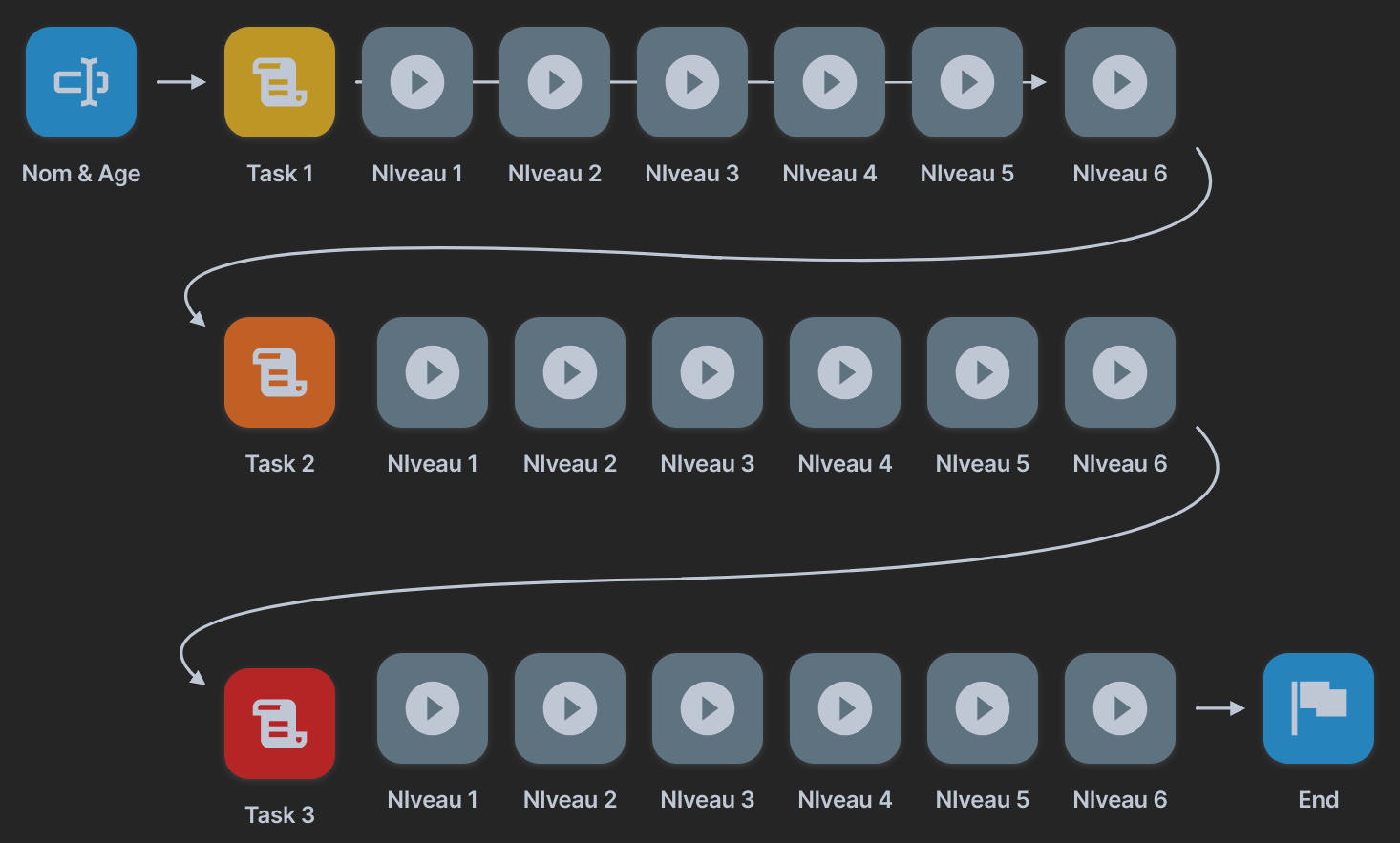
Il prend la forme d'un jeu vidéo structuré en 18 niveaux organisés par blocs de difficulté. Les joueurs/enfants devront réaliser différentes tâches afin de tester différentes formes de prise de perspective.
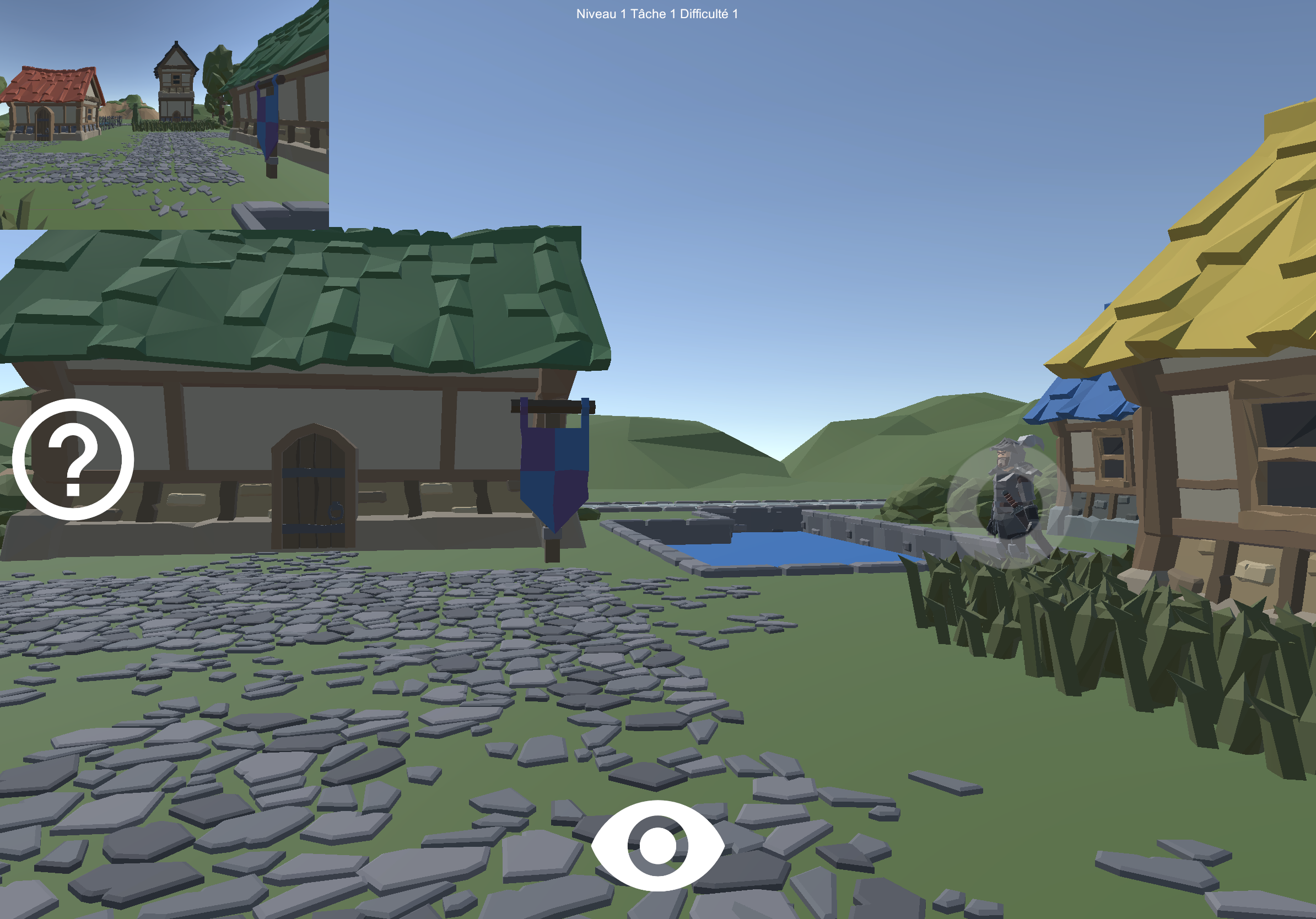
- Niveaux 1–6 : sélectionner le personnage correspondant au point de vue affiché
- Niveaux 7–12 : identifier le point de vue correct parmi plusieurs propositions
- Niveaux 13–18 : localiser la région occupée par le personnage
🔁 Boucle de jeu
- Chargement initial de la map et de l’interface
- Saisie du nom et de l’âge (sauvegarde immédiate)
- Chargement séquentiel des niveaux avec écran d’introduction
- Enregistrement instantané de chaque action
- Progression linéaire jusqu’à l’écran de fin
📝 Architecture pensée pour garantir l’intégrité des données, même en cas d’arrêt brutal de l’application.
🌍 Environnement
- Bâtiments et volumes simples
- Éléments visuels distinctifs pour faciliter l’orientation
- Architecture pensée pour être modulable en difficulté (suppression progressive de repères)
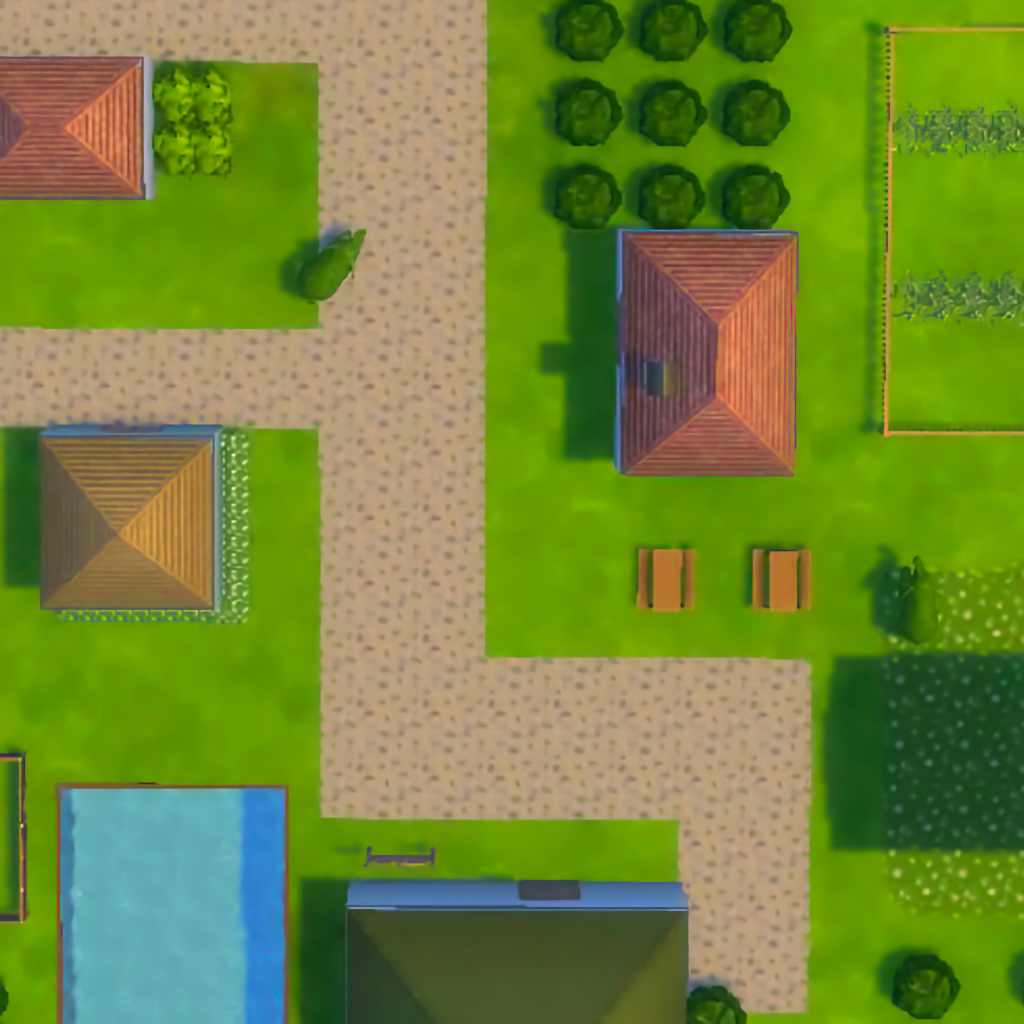
Schéma de l'environnement de jeu
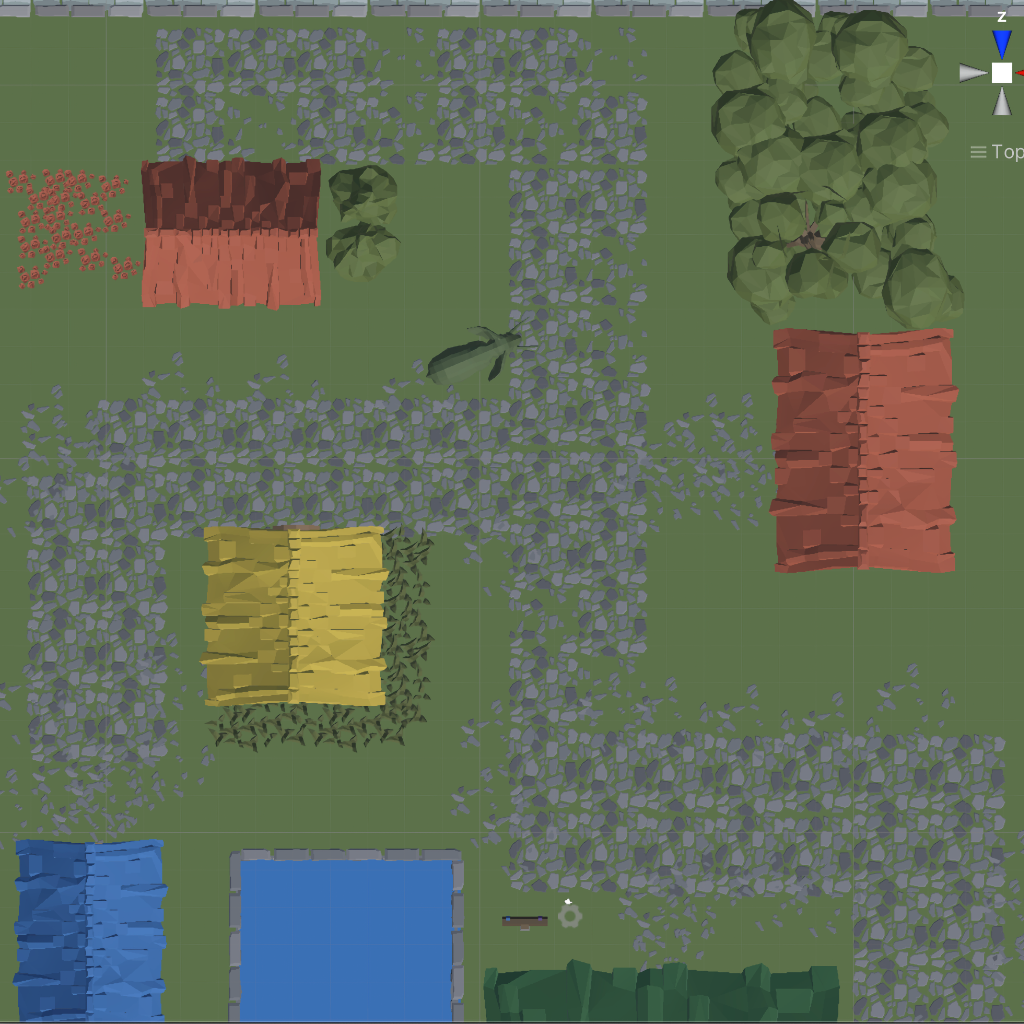
Implémentation de l'environnement dans Unity
🧩 Interface
Interface volontairement minimaliste, adaptée à un public très jeune.
- 👁️ Visibilité : éléments larges et fortement contrastés
- 🧠 Compréhension : icônes et codes couleur privilégiés
- 🛡️ Prévention des erreurs : confirmation systématique des réponses
⚙️ Architecture et collecte des données
Fonctions principales :
- Gestion dynamique de la caméra (vue subjective / objective)
- Gestion des entrées joueur (rotation, sélection, validation)
- Affichage des consignes et informations de niveau
- Enregistrement continu des données de session
- Configuration dans des ScriptableObjects
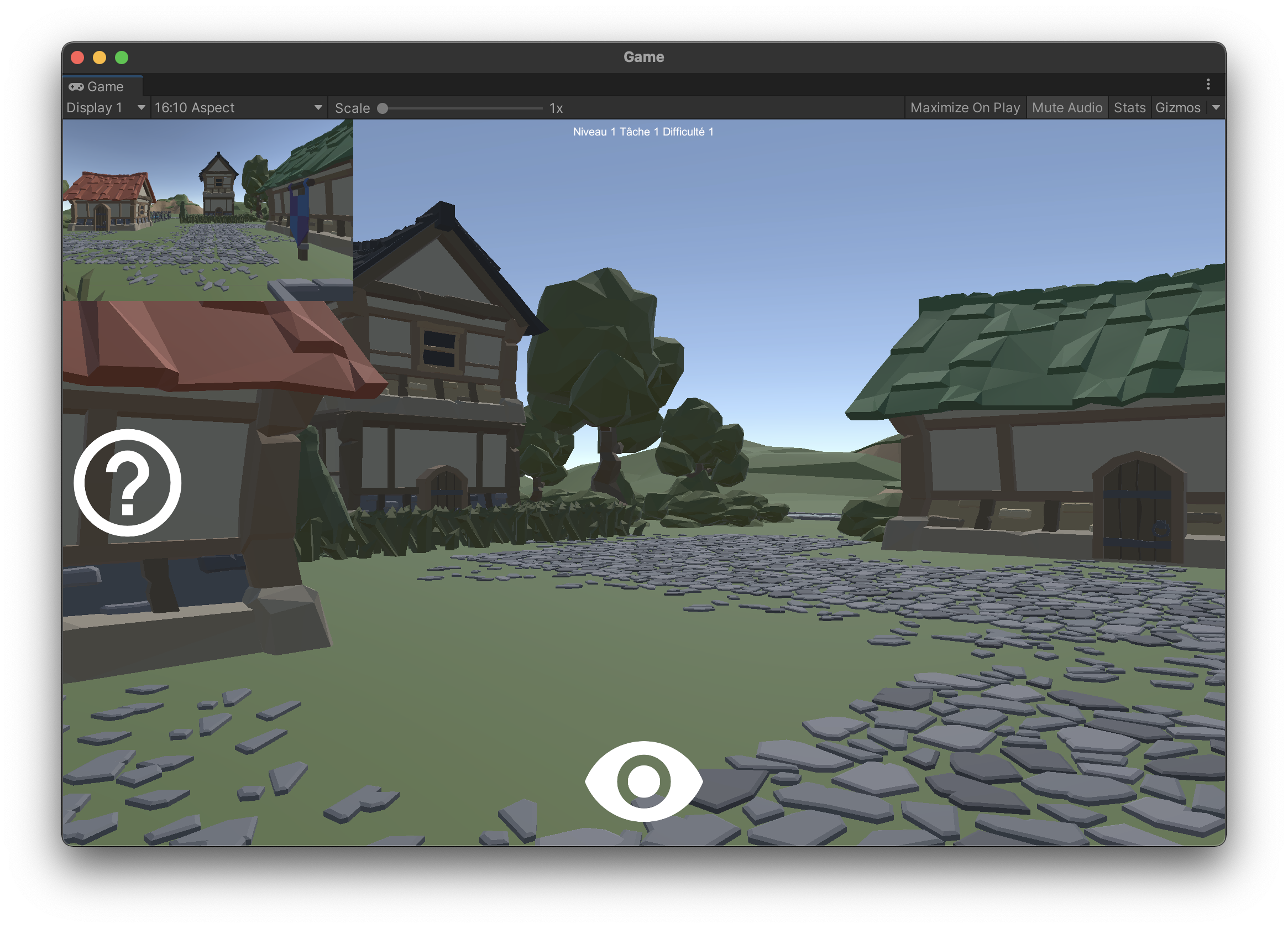
Point de vue à la première personne
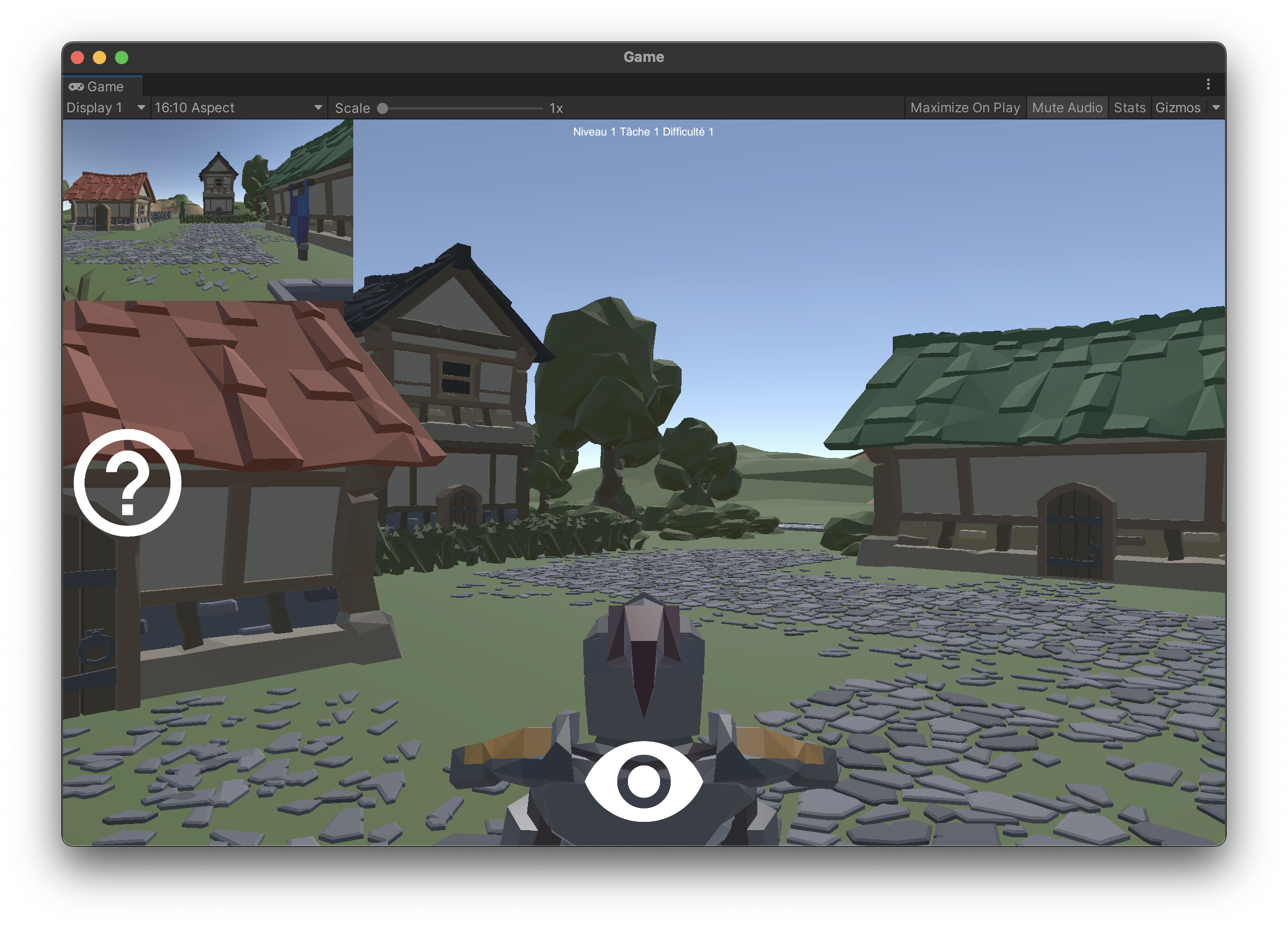
Point de vue à la troisième personne
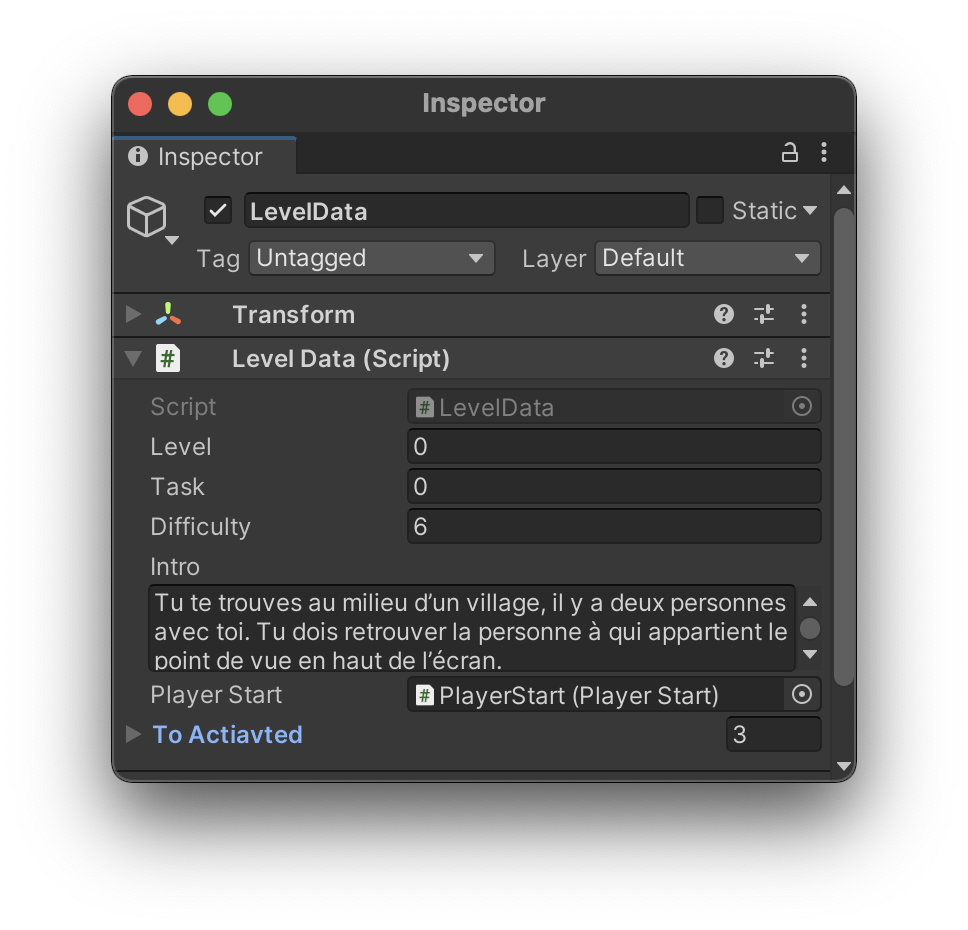
Scriptable Object de configuration de niveau
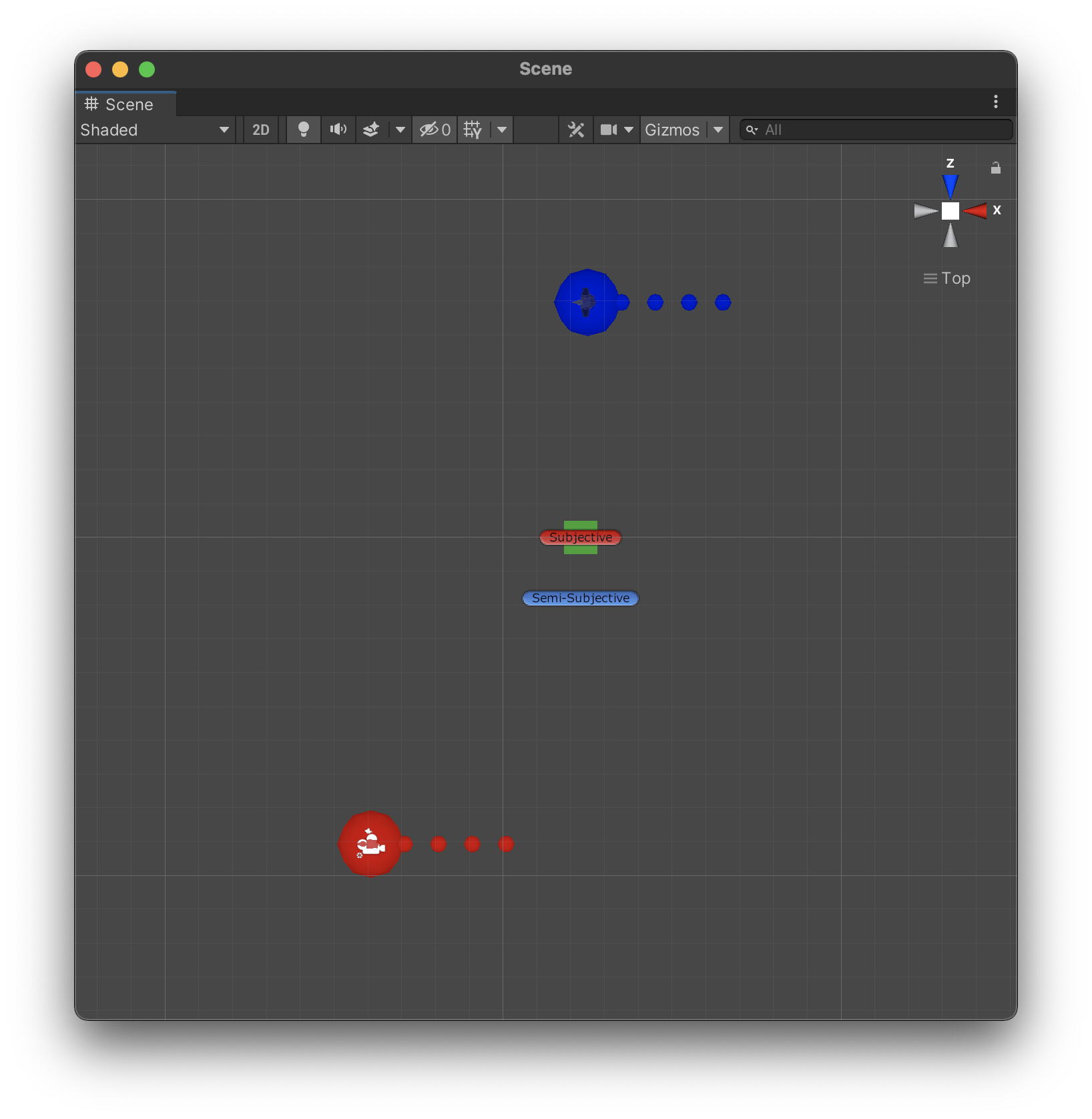
Scène couche qui définira les transformations des différents acteurs d'un niveau